About.
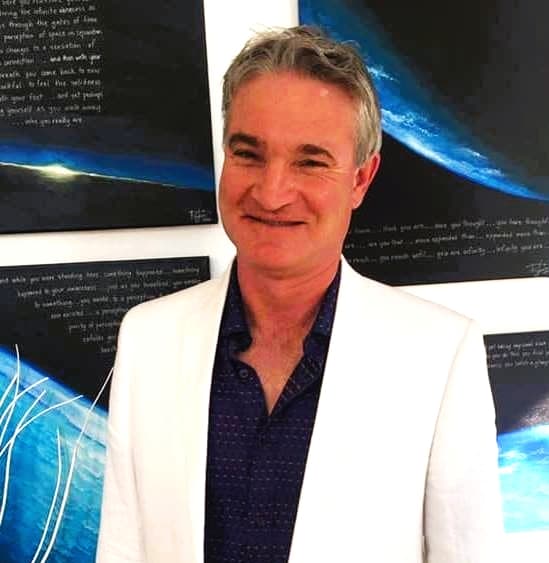
I have spent more than thirty years working at the intersection of technology, organizations, and human behavior.
My career has moved through several major waves of technological change: product design, enterprise computing, the internet, cloud infrastructure, cybersecurity, and now artificial intelligence.
Across each of those transitions, the technologies changed dramatically. The underlying challenge did not.
Organizations repeatedly acquire new technical capabilities faster than they learn how to redesign themselves around them.
That gap has shaped much of my work.
I began my career in industrial and product design, where the central question was how to bring together human needs, technical constraints, function, and form into a coherent system. Over time, the scale of the systems I worked on expanded: from individual products, to enterprise infrastructure, cloud platforms, cybersecurity services, and large software development organizations.
I have worked inside global technology companies including IBM, EDS, HP, and Cisco, as well as smaller entrepreneurial environments. My roles have included product design, technical program management, organizational process design, cloud and infrastructure strategy, and the coordination of complex software engineering programs.
The titles have varied. The underlying work has been remarkably consistent: understanding complex systems, identifying where they are failing to perform, and redesigning the relationships between people, processes, information, and technology.
AI changes the scale of that problem
Artificial intelligence is often discussed primarily as a new technology platform.
I believe its more important consequence is organizational.
As AI becomes capable of performing increasing amounts of cognitive work, companies will have to reconsider fundamental assumptions about how work is divided, how decisions are made, how knowledge moves through an organization, and what capabilities should remain distinctly human.
The opportunity is therefore larger than automating existing workflows.
It is to redesign organizations around a new combination of human and machine intelligence.
That requires thinking simultaneously about technology, operating models, product strategy, organizational structure, culture, and human behavior.
It also requires resisting the temptation to automate poorly designed systems simply because automation has become possible.
Designing intelligent systems
My current work focuses on what I describe as Designing Intelligent Organizations: exploring how companies can use AI to create systems that are more adaptive, more coherent, and more capable of learning.
That includes questions such as:
How should organizations redesign processes when AI agents can perform meaningful portions of knowledge work?
Where should human judgment remain central?
How should product strategies change when software increasingly acts rather than simply responds?
How do engineering and product organizations need to operate when the cost of creating software falls dramatically?
And how do companies introduce AI without weakening the very human capabilities—judgment, creativity, emotional regulation, trust, and meaning—that become more important as routine cognition is automated?
These are not purely technical questions. They are systems-design questions.
Working together
I work with organizations facing complex technology transitions where the problem is not simply choosing a tool, but determining what the organization should become because the tool now exists.
Engagements may involve AI transformation strategy, organizational and operating-model design, complex program leadership, or product and platform strategy.
I am particularly interested in situations where technology, organizational structure, and human behavior intersect—where the challenge is ambiguous, multiple systems are interacting, and the path forward is not yet obvious.
The objective is not AI adoption for its own sake.
It is to design organizations in which people and technology perform better together.